Showing posts with label Plants. Show all posts

Wednesday, May 27, 2015

Plants Wanted For Library Sale


PHOENICIA LIBRARY FAIR
and PLANT SALE
Saturday, June 6 
10 - 2 PM
at Mama’s Boy

Attention all Gardeners and Plant Enthusiasts
It’s time to dig, divide and donate all your overgrown, unwanted and, of course, beautiful plants. We are interested in annuals, perennials, herbs, shrubs, and houseplants. 

Donations can be accepted on Thursday, June 4th, and Friday, June 5th at Mama’s Boy. 

Please re-plant a few days in advance and label your plants. Donations of garden items, trowels, shovels, gloves, books and garden accoutrements will also be accepted as long as items are in good condition.

Tuesday, April 28, 2015

A Three Leafed Lesson

As spring gears up it is important to remember to watch for poison ivy in and around our houses. Our poet laureate, Boreegared (aka Mike O'Neil) wrote this lovely poem to remind us to beware of the three leafed danger.


The Three Leaf Lesson

A lesson for you, tenderfoot,
As spring sends out its green-ed root,
And ivy creeps both high and fine,
It looks so lovely on its vine.

Look well upon its figuration,
For three leaves earns it condemnation,
Touch it not or you will scratch,
And pustules, bumps, and hivies hatch.

The medicos will sell you potions,
Sell you creams and prescribe lotions,
But summer heat and sweat galore,
Will spread the poison more and more.

Then Mother Nature grants surcease,
As summer ends and heat waves ease,
You’re not a tenderfoot—no more,
You know it’s three leaves, and not four.

Boreegard  

Wednesday, April 23, 2014

My Poor Rhododendron

I love my rhododendrons. I have six. One is in the back of my house and has been nibbled into a huge topiary by the deer. The others are off my front porch and have fared far better. They were probably at least 20 years old when I bought my house and 20 more years have passed since then. So I think they are between 40 and 50 years old at this point. They are very large and up until recently, very healthy.

Usually in the wintertime watching my rhododendron through the window proves to be the best way to tell how cold it is outside. When the temperature drops the leaves close up tightly. The colder it gets, the more they contract. This year they spent a lot of time closed up.


When the weather warms up, the plant opens it's leaves up fully again. It reminds me of the opening and closing of an umbrella.   And it is a fun and, though not precise, fairly accurate way to see how cold it is outside without looking at your thermometer or venturing outside.


Unfortunately, this spring I noticed that a lot of very large branches on the bushes were not only not opening anymore they were turning brown. This has never happened before. But we had such a very long, very cold winter that I guess they just couldn't handle the severity of the elements.


At first I was heartbroken. I thought that my beautiful bushes were destroyed but then I realized that, although there was a significant amount of damage, none of the bushes were completely dead. So I am going to wait until they bloom in the beginning of June and then severely prune them and hope that they come back to their former beauty. I guess only time will tell. I hope your plants fared better through the harsh winter of 2013-2014!

Friday, October 11, 2013

More About Bee Balm

After reading my previous post regarding Bee Balm, the intrepid Mike O'Neil aka Boreegard, sent me a message with more information about the feisty little plant. One of the things in the article that I didn't know was that it is commonly called Oswego Tea, very interesting. Although I have made tea out of it many times myself, I was unaware of that name.

Below is the link that will direct you to the information he sent. Check it out if you are interested.

http://voices.yahoo.com/oswego-tea-monarda-didyma-other-boston-tea-5051952.html

Wednesday, September 25, 2013

Let's Talk Garlic


The Hudson Valley Garlic Festival is this weekend. For those of you who would like to try growing some garlic in your own gardens, this is a great time to get some locally grown stock to plant. I have been growing garlic for about 14 years now and this year was another great year (see above). I have found that garlic does very well in Woodland Valley. It takes a couple of years to really establish your growing stock but once you do, you will find you will get consistently large heads in the mid-summer.

Garlic is planted 6 weeks before the first GROUND FREEZE (not frost). I always figure that to be around the first week of December. So I plant my garlic sometime in mid-October. You break up the entire head into separate cloves. Then replant the cloves about 6 inches apart and roughly 2 inches deep. It is best to only replant the largest cloves because clove size is the largest factor in determining ultimate head size. That's basically all there is to it. You can fertilize the garlic in the fall when you put it in the ground and again in early spring if you choose to do so.

Garlic is the first thing to appear in the spring. If it is hard neck garlic it will keep growing until somewhere in June when it sends up shoots called scapes. These scapes will turn into bulbils if you let them grow. That will sap the energy from the growth of the bulb main bulb underground so you want to break them off when they get big enough that you see the ridge that forms the bulbil. 

The top of the garlic plant starts to die somewhere in June or July. You want to pull the garlic out of the ground sometime in late July or early August. But deciding when to pull the garlic is the hardest thing to get right. You want to wait until most, but not all, of the plant has died back. If you pull too early, your cloves will be small. If you pull too late, your cloves will start to open up and then not store well. I tend to wait until all but the last two leaves have died. It is best to err on the side of pulling too soon rather than too late. 

Once you have pulled your garlic you want to let it dry for a month to six weeks with the top of the plant still intact. Some people never cut off the top but I find it harder to store so I do cut it after it has dried out. At that point I separate out the largest heads for replanting and store the rest for eating. You want to store it in a cool (but not freezing area). It should be out of direct light but, in my experience it doesn't have to be total darkness.

Ok, so that is what I know about planting garlic. Try and plant some of your own. The freshness and flavor is incomparable. And garlic is so good for you too! So get yourself to the garlic festival this weekend and give it try!


Sunday, June 30, 2013

Second Weed Walk Report


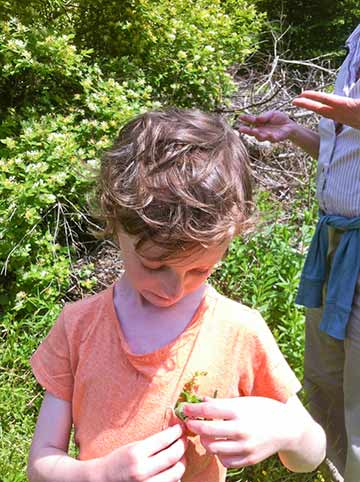
The second WCA weed walk with Violet Snow today was another fabulous success. It was held on the gorgeous Botchford/Gillespie property which is mid-valley. We learned more about the different plants that populate this beautiful place we call home. It was a warm day but everyone had hats, sunscreen and plenty of water so they were prepared for the heat and were able to enjoy themselves immensely. Thanks to the Botchford/Gillespie clans for making the property available and to Violet Snow for once again sharing her vast knowledge.

Sunday, June 9, 2013

Weed Walk Report

Last Saturday's weed walk (sponsored by the Woodland Community Association) with Violet Snow on the Larkin Farm property was great fun! We had an interested and engaged group with whom Violet happily shared her vast knowledge of the flora and fauna. We ended the afternoon with a picnic in the field. Fabulous caterer and WCA member Marcey Brownstein provided some delicious lemonade and the talented Rebecca Miller Ffrench (chef, author, stylist and also WCA member) surprised and delighted everyone with a gorgeous cake and some scrumptious scones.

Thanks to Violet for sharing her knowledge, the Larkin Farm Association for hosting the walk, Marcey Brownstein for the best lemonade I have ever had and Rebecca Ffrench Miller for taking our picnic to a whole other level with beautiful and delicious desserts. I think everyone had a wonderful time. 

All photos below are by Josh Sheldon (thanks Josh!) except for the last two which are from Rebecca Miller Ffrench. 


Tuesday, June 4, 2013

Phoenicia Library Fair This Weekend


THIS WEEKEND
Phoenicia Library Fair

Support your local library and visit the Phoenicia Library Fair
on Saturday, June 8, 2013 from 10-3!

The fair will take place in front of Mama’s Boy Market on Main Street and the library’s temporary location at 9 Ava Maria Drive (Across from the Post Office).

BOOKS galore to peruse and purchase. 

HUGE PLANT SALE
plenty of plants including annuals, perennials, herbs, shrubs and houseplants for you to purchase.
MUSIC by Uncle Rock and the Catskill Ukulele Group. 
SATISFY your sweet tooth and buy some homemade goodies at our bake sale. 

Hope to see you there!

For more information, contact the Phoenicia Library at 845-688-7811 or
phoenicialibrary@gmail.com.

 
Phoenicia Library, 9 Ava Maria Avenue, Phoenicia NY 12464
845.688.7811

http:/phoenicialibrary.org/

Saturday, May 25, 2013

Phoenicia Library Needs Plants

The annual library fair and plant sale is two weeks from today. If anyone has plants that they can donate please call Marvella at the phone number below.


Phoenicia Library Plant Sale

Attention all gardeners!  Its time to dig, divide and DONATE!

We’re interested in annuals, perennials, shrubs, herbs and houseplants to sell at our annual library fair on Saturday, June 8th from 10-3.

If you need help digging or need containers, please call Marvella @ 845-688-5407

You can bring your plant donations to the library on Friday, June 7 or early in the morning on Saturday, June 8 in front of Mama’s Boy Market on Church Street, Phoenicia.

Please label your plants if you can.

THANK YOU FOR YOUR SUPPORT.

WHAT GREEN TREASURES YOU DONATE WILL GO DIRECTLY TO FUNDING OUR LIBRARY'S MISSION OF EDUCATION, LEARNING AND ENJOYMENT.

Phoenicia Library, 9 Ava Maria Avenue, Phoenicia NY 12464
845.688.7811

http:/phoenicialibrary.org/

Tuesday, May 21, 2013

Ramp It Up


I went ramping (picking wild leeks) last week and got a nice bunch. Looks like there is a potato leek soup in my future. Keep your eyes open when you are in the woods. This is the time of the year to find them. Remember when you are picking them (or any wild food or flower) not to take the whole patch. Leave some so that they can replenish themselves for next year.

Thursday, June 30, 2011

Plant Walk this Saturday July 2nd

There are still some spaces available for WCA members at this weekend's plant walk with Violet Snow. Please let me know if you would like to attend. Here are the details:

PLANT WALK w/VIOLET SNOW - Saturday July 2nd, 11:00am - 1:00pm - Location will be in Woodland Valley - Join herbalist Violet Snow for a stroll through our beautiful valley. She will explore and identify some of the different plants & shrubs that grow all around us. Violet has a vast knowledge of both the edible and medicinal properties of many of the herbs in the Hudson Valley. The group is limited to 15 and sign-up is required! If you sign up and then are unable to attend please notify me as soon as possible so I can extend the opportunity to someone else. Please RSVP to me at woodlandvalleymail@gmail.com. The walks will require some light uphill walking. Please remember your sunscreen, a hat, good walking shoes and water.

Tuesday, May 31, 2011

Fun at the Plant Walk

Yesterday was the first of two WCA plant walks guided by Violet Snow. You may all remember Violet for her naturalist column in the Phoenicia Times. She is extraordinarily knowledgeable about the flora and fauna of our area. The group toured the Botchford/Gillespie property which, with it's beautiful views, is a special treat all by itself. They had a great time learning about what is growing right in our own backyards.

If you are a WCA member and missed this great opportunity, Violet will be giving another walk on Saturday, July 2nd from 11:00am to 1:00pm. The group is limited to 15 so be sure to sign up soon!! You can email me at woodlandvalleymail@gmail.com to reserve your space.


Thursday, April 28, 2011

On the Side of the Road

Many of you have probably noticed the small yellow flowers that are abundant on the side of Woodland Valley Road right now. They are Coltsfoot. The flowers are one of the first things to bloom in the spring and I always look forward to seeing them. Below is some information that I copied from Wikipedia about the plant.

Tussilago farfara, commonly known as Coltsfoot, is a plant in the family Asteraceae. Coltsfoot is a perennial herbaceous plant that spreads by seeds and rhizomes. Tussilago is often found in colonies of dozens of plants. The flowers, which superficially resemble dandelions, appear in early spring before dandelions appear. The leaves, which resemble a colt's foot in cross section, do not appear usually until after the seeds are set. Thus, the flowers appear on stems with no apparent leaves, and the later appearing leaves then wither and die during the season without seeming to set flowers. The plant is typically between 10 - 30 cm in height.

Coltsfoot is native to several locations in Europe and Asia. It is also a common plant in North America and South America where it has been introduced, most likely by settlers as a medicinal item. The plant is often found in waste and disturbed places and along roadsides and paths. In some areas it is considered an invasive species.

It has been used medicinally as a cough suppressant. The name "tussilago" itself means "cough suppressant." The plant has been used historically to treat lung ailments such as asthma as well as various coughs by way of smoking. Crushed flowers supposedly cured skin conditions, and the plant has been consumed as a food product.

The discovery of toxic pyrrolizidine alkaloids in the plant has resulted in liver health concerns.

- Wikipedia - http://en.wikipedia.org/wiki/Tussilago_farfara


I

Friday, September 25, 2009

Plantago Major


I just realized that after I went on and on about Jewelweed and my experiments with it on my poison ivy I never told all of you what did work to clear it. I ultimately used common plantain (Plantago Major) with great success. I chopped the plantain up and made a poultice. I taped (I used medical tape and/or bandaids) the poultice to my leg for several hours a day. It dried up rather quickly after that. I have used common plaintain to take the pain out of bee stings as well. It takes a couple of minutes but it works great (at least for me). You can find it easily here in Woodland Valley. It grows in most lawns. Try it out next time you get a poison ivy rash.

I found the following additional information about common plantain on the Wikipedia site.

Plantago Major
The standard native English name is Greater Plantain though it is also called Common Plantain in some areas where it is introduced, particularly North America. Another one of its common names was "Soldier's Herb" for its use on the battlefield as a field dressing. The plant is native to most of Europe and northern and central Asia. It is widely naturalized elsewhere in the world, where it is a common weed. It is believed to be one of the first plants to reach North America after European colonization. Native Americans called the plant "white man's footprint" or "Englishman's foot" because it appeared wherever white men went. Historical uses as a wound healer and snakebite remedy have been found to have scientific merit. It is a potent coagulant. The herb is astringent, anti-toxic, antimicrobial, anti-inflammatory, anti-histamine, as well as demulcent, expectorant, styptic and diurectic. Externally, a poultice of the leaves is useful for insect bites, poison-ivy rashes, minor sores, and boils.

Tuesday, September 8, 2009

Final Facts About Jewelweed


The last thing I wanted to post about Jewelweed was a couple of photos of the seed pods (above) before they are opened and the seeds themselves (below) after they are out of the pod. I have been having fun popping them and eating them the last few days. According to the information that I found, you throw out the curly part of the popped pod and eat only the seeds themselves. I have found that sometimes the seeds are green and sometimes they are brown.

By the way, I have personally had a lot of success treating stinging nettles rashes with Jewelweed. If you put the liquid from a crushed stem on any part of your skin that has come into contact with the nettles it takes the sting out. It takes a minute or two to work but I have found it to be very effective for me. And the great part is that they like the same growing conditions so they are very often found together in the woods. Try it next time you get into the nettles.

Saturday, September 5, 2009

More About Jewelweed

Jean Druffner sent me some more information on Jewelweed. Here is her message.

"Touch-Me-Not has that name because when one touches the seed case it will pop open and release the seeds. The seeds are edible and quite tasty. As with any wild foods, a little taste is best because there can be some acidic properties of many wild foods that can irritate the digestive system. I often pop the Touch-Me-Not and eat the seeds. I enjoy their nutty tastiness."

- Jean

I learned this fact the other day when I was researching Jewelweed for the blog. I ate some seeds today and they were great. Like Jean said, they have a nutty flavor and the seed pods pop open with such gusto it makes me smile. So they are both delicious and fun, try a few when you get the chance!

Wednesday, September 2, 2009

Jewelweed - Poison Ivy Remedy


Because some people never learn, me for instance, I have now gotten a bit of poison ivy on my ankle from wearing sandals in the woods. Not only did I amble along with my legs unprotected but I wasn't watching where I was walking and what I was stepping on or around. Oh well, next time I will be more careful. But in the meantime I am experimenting with natural herbal remedies. The first one that I tried was jewelweed which is easy to spot right now because it is in flower. The plant is also sometimes referred to as Spotted Touch-Me-Not which has always perplexed me because it is used to sooth the skin. There are both the orange and yellow (Pale Touch-Me-Not) flowered varieties in our area. Jewelweed is a member of the impatiens family.

I got the information below from Wildman Steve Brill's website. It is from his book "Identifying and Harvesting Edible and Medicinal Plants in Wild (and Not-So-Wild) Places" (for those of you who don't have the book, it is great!).

"If you accidentally touch poison ivy and apply jewelweed juice to the affected area before the rash appears, you probably won't get the rash. One of my best strawberry patches is also infested with poison ivy. You can't avoid touching it as you collect the irresistible fruit. I have everyone apply jewelweed to all exposed areas when we leave, and nobody ever gets a rash.

The Indians treat already-developed poison ivy rash by rubbing jewelweed's broken stem on the rash until it draws some blood. The rash then dries out, a scab forms, and healing occurs.

There are many ways to capture jewelweed's medicinal properties: The fresh plant lasts a week in a sealed container in the refrigerator. 1960s foraging guru and author Ewell Gibbons reported the jewelweed tincture he extracted in alcohol went moldy, but I've soaked fresh jewelweed in commercial witch hazel extract for a few weeks, and the extract of the two herbs works well and doesn't perish.

You can also make jewelweed ointment by simmering a small amount of jewelweed in light vegetable oil (any vegetable oil except olive oil, which burns) 10-15 minutes. Use only a small handful of jewelweed stems per quart of oil, or bubbles of jewelweed juice will form in the ointment and go moldy. Strain out the herb, add a handful of beeswax to thicken it, and heat until melted. Take out a spoonful and let it cool to test the thickness, and add more oil or beeswax as needed. Add the contents of one oil-soluble vitamin E capsule, a natural preservative, and let it cool. Refrigerated, it lasts for months.

- Steve Brill

Although the plant seem to sooth my skin when I rubbed the juice of the stem onto the rash I didn't think it was drying it out quickly enough for me. I think next time I will try the jewel weed a little earlier in the outbreak.

Monday, April 27, 2009

Trillium


Another beautiful thing that is starting to bloom right now in the valley is the Trillium. I noticed these lovely flowers on my walk yesterday. If you would like more information on this plant you can go to Wikipedia - Trillium and read about it.

Sunday, April 12, 2009

Beauty and the Beast


WCA member Paul Misko recently sent me this message.

"On a walk at the head of the valley I came upon two unusual sights. The first was an early Spring Beauty flower in bloom by the 1st of April. Later I saw a bat flying in small circles overhead, as if lost. He then just crash landed and fluttered around on the ground. For a few years now our brown bats have been suffering from a disease which causes them to leave their roost and fly around at the wrong seasons, and the wrong time of the day. The disease is called "White Nose Syndrome" , due to white smudges found on
the nose and wings. It causes the bats to leave hibernation early and search for non-existant food, thus burning up their stored fat reserve. They often die before finding something to eat. One picture shows the bat which landed on my porch during a snow storm. Many colonies of bats have been affected , and so far it's progress cannot be stopped. Bats may have rabies, so if you see one lying on the ground, don't pick it up."
- Paul Misko

Wednesday, March 25, 2009

Mushroom Mystery Solved

I am very excited! I received this message today with information about the mushroom that I found and posted a few days ago. Here is what the email said:

"My name is Ann Marie Misko sister in law to Paul Misko. I was looking over the site when I saw your mushroom. I found some information on it for you. I found this information in the National Audubon Society pocket guide that we just happen to carry around just for moments like this.

It is called a Scarlet Cup (Sarcoscypha coccinea)
In North America it is recognized as a harbinger of Spring. In the far west, it is a winter mushroom. Despite its bright red color, it is not always readily visible as it may be covered by leaves or partially melted snow. In such instances, its accidental discovery can be a startling experience. The mature mushroom may last for several weeks.

Identification: Saucer shaped to cup shaped, from 1-2 1/2" wide, with incurved rim. Inner surface of cup scarlet; outer surface whitish with tiny hairs. Stalk usually absent, but when present it is short and white.
Edibility: Unknown; reportedly tastes pleasant.
Similar Species: The Stalked Scarlet Cup (S. occidentalis) is smaller and has prodominent white stalk. The Hairy Rubber Cub (Galiella rufa) is reddish brown.
Habitat: On twigs and branches lying on the ground, usually partially covered. Occurs singly or in small groups.
Range: Eastern North America; West Coast

I hope this information was helpful. It was very exciting for me to be able to find it. Thank you and have a good day."

- Ann Marie Misko

Thanks so much Ann Marie!!! I am so happy you shared this information with us!